
Precision Separation: A Buyer’s Guide to Ohaus Frontier 5000 Centrifuges | Sycamore Life Sciences

By Sycamore Life Sciences Editorial Team · Updated March 2026
Buyer GuideOhaus Frontier 5000 Centrifuge Buying Guide
The Ohaus Frontier 5000 Series includes compact low-speed models, versatile benchtop centrifuges, high-speed refrigerated systems, and large-capacity floor units. This version helps users narrow the lineup faster with a live model finder, comparison filters, and expandable technical details.
Quick Answer
Find My Model
Answer four quick questions to see the best fit for your lab.
Start Here: How to Choose the Right Frontier 5000 Model
Most buyers can narrow the full series down with four questions:
- What tube size or sample volume are you spinning? Microtubes, conicals, plates, blood tubes, or liters per run.
- What RCF do your protocols require? RCF matters more than RPM because it tells you the actual force applied to the sample.
- Do you need refrigeration? This is usually required for proteins, RNA, exosomes, viruses, enzymes, and live cells.
- Do you want one versatile centrifuge or a dedicated application model? Multi-Pro units are the most flexible. Micro and mini models are more task-specific.
A simple shortcut: choose Mini/Low-Speed for routine basic separation, Microcentrifuges for 1.5–2.0 mL tubes, Multi-Pro for general lab versatility, High-Speed for molecular biology requiring high g-force, and High-Capacity Floor Models for large-volume processing.
Mini & Low-Speed
Best for teaching labs, basic clinical use, blood tubes, and routine separations that do not need high g-force.
Microcentrifuges
Best for 1.5 mL and 2.0 mL tubes used in DNA, RNA, protein, and PCR workflows.
Multi-Pro Benchtop
Best all-around choice for labs that need flexibility across tubes, plates, and varied protocols.
High-Speed
Best for demanding molecular biology and research applications requiring maximum RCF.
High-Capacity Floor Models
Best for clinical, blood banking, and bulk processing where throughput matters more than footprint.
Refrigerated Options
Available across several families for temperature-sensitive samples and methods that specify 4°C centrifugation.
Why Labs Choose the Frontier 5000 Series
- Broad performance range from low-speed routine spins up to 30,000 RPM and 65,395 x g.
- Multiple form factors including compact benchtop, microcentrifuge, and floor-standing high-capacity units.
- Rotor flexibility with swing-out and fixed-angle options for different sample types and workflows.
- Automatic Rotor ID on Multi-Pro models FC5714 and above.
- Motor-driven lid lock on FC5718 and above plus FC5515 / FC5515R.
- Refrigerated models use R290 natural hydrocarbon refrigerant.
- Imbalance detection, programmable runs, and a platform designed for daily laboratory use.
Quick Comparison by Family
| Family | Best For | Typical Capacity | Refrigerated Options | Standout Models |
|---|---|---|---|---|
| Mini & Low-Speed | Routine separation, teaching, basic clinical workflows | Up to 6 x 50 mL | No | FC5706P, FC5707 |
| Microcentrifuges | DNA/RNA prep, PCR, protein work, microtubes | 24 to 44 x 1.5/2.0 mL | Yes | FC5513, FC5515R |
| Multi-Pro Benchtop | General lab use, mixed workflows, plates and tubes | Up to 4 x 290 mL | Yes | FC5714, FC5718R, FC5816R |
| High-Speed | Molecular biology, subcellular work, high g-force applications | Up to 4 x 290 mL | Yes | FC5720R, FC5830R |
| High-Capacity Floor | Blood banking, clinical throughput, large-volume processing | Up to 4 x 1,000 mL | Yes | FC5916R, FC5917RF |
Best Ohaus Frontier 5000 Models by Need
Best for general-purpose lab use: FC5714
The FC5714 is the easiest starting point for labs that want a versatile benchtop centrifuge without moving into higher-cost refrigerated systems. It handles common molecular biology, teaching, and plate-based workflows well.
Best for refrigerated benchtop versatility: FC5718R
The FC5718R is a strong fit for labs that need more speed than an entry benchtop unit and want refrigeration for proteins, RNA, or other temperature-sensitive samples.
Best for high-speed molecular biology: FC5830R
The FC5830R is the top choice when your protocols demand maximum RCF for advanced research applications such as subcellular fractionation, virus concentration, and exosome work.
Best for high-throughput microtubes: FC5515 / FC5515R
The FC5515 and FC5515R are ideal for labs processing large batches of microtubes. Choose the refrigerated version when temperature control matters.
Best for large-volume processing: FC5917RF
The FC5917RF is built for labs where throughput is the priority. It is the flagship floor model for large sample loads, blood banking, and high-volume clinical processing.
Model Selection Guide — All 16 Configurations
Use the filters to hide models that are not relevant to your workflow.
| Model | Max RPM | Max RCF (x g) | Max Capacity | Refrigerated | Weight | Best Use |
|---|---|---|---|---|---|---|
| FC5706P | 6,000 | 4,427 | 6 × 50 mL | No | 10.5 kg | Blood tubes, clinical, teaching |
| FC5707 | 6,800 | 4,445 | 4 × 50 mL | No | 11.5 kg | Cell culture, basic separation |
| FC5513 | 13,500 | 17,317 | 24 × 1.5/2.0 mL | No | 12.6 kg | Standard microcentrifuge, teaching |
| FC5513R | 14,500 | 17,157 | 24 × 1.5/2.0 mL | Yes (R290) | 33 kg | Refrigerated micro, enzyme work |
| FC5515 | 15,200 | 21,953 | 44 × 1.5/2.0 mL | No | 17 kg | High-throughput micro |
| FC5515R | 15,200 | 21,953 | 44 × 1.5/2.0 mL | Yes (R290) | 35 kg | High-throughput refrigerated micro |
| FC5714 | 14,000 | 18,624 | 4 × 200 mL / 30 × 15 mL | No | 30 kg | DNA/RNA, general use, microplates |
| FC5718 | 18,000 | 23,542 | 4 × 200 mL | No | 43 kg | General molecular biology |
| FC5718R | 18,000 | 23,542 | 4 × 200 mL | Yes (R290) | 60 kg | Molecular biology, benchtop research |
| FC5816 | 15,000 | 21,379 | 4 × 290 mL | No | 52 kg | Mid-volume general lab |
| FC5816R | 16,000 | 24,325 | 4 × 290 mL | Yes (R290) | 56 kg | Mid-volume refrigerated research |
| FC5720R | 20,000 | 38,007 | 4 × 200 mL | Yes (R290) | 71 kg | DNA/RNA, protein pelleting |
| FC5830R | 30,000 | 65,395 | 4 × 290 mL | Yes (R290) | 91 kg | Exosomes, subcellular fractionation |
| FC5916 | 16,000 | 24,325 | 4 × 750 mL | No | 85 kg | Bulk industrial processing |
| FC5916R | 16,000 | 26,331 | 4 × 750 mL | Yes (R290) | 118 kg | Large-volume clinical research |
| FC5917RF | 16,010 | 26,361 | 4 × 1,000 mL | Yes (R290) | 157 kg | High-volume clinical, blood banking |
Rotor Guide: Swing-Out vs. Fixed Angle
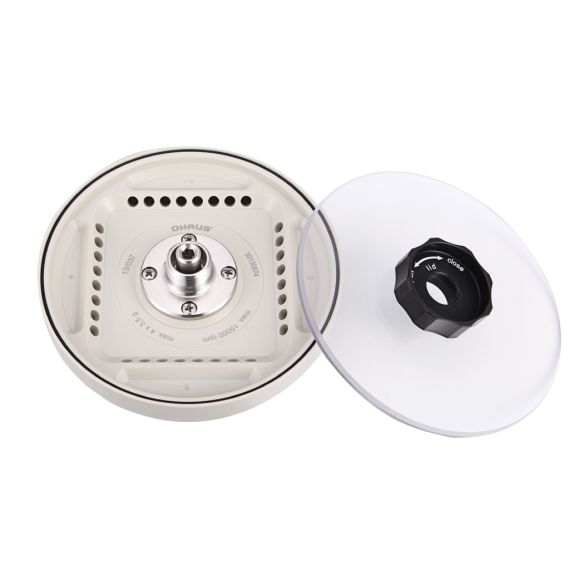
Every Frontier 5000 centrifuge accepts interchangeable rotors. Most models are sold without a rotor, letting you match your tubes and application exactly.
Swing-Out Rotors
Buckets swing from vertical to horizontal during acceleration. Pellets form at the tube bottom and are easier to aspirate. Best for blood tube processing, density gradients, large-volume samples, and gentler pellet handling.
Fixed Angle Rotors
Tubes remain at a fixed angle during the run. Shorter pellet path means faster separations and higher g-forces at the same RPM. Best for plasmid preps, protein pelleting, and cell harvesting.
Specialty Rotors
Includes microplate carriers, PCR strip rotors, Vacutainer racks, and BIOSEALS aerosol-containment buckets for infectious material work.
Need help selecting a rotor? Contact Sycamore Life Sciences and match your tube format, volume, and application to the correct configuration.
Do You Need a Refrigerated Centrifuge?
Refrigeration Required
- Enzymes and enzyme complexes
- Proteins and antibodies
- Live cells and primary tissue culture
- Temperature-sensitive viruses / viral vectors
- Exosomes and extracellular vesicles
- Any protocol specifying “centrifuge at 4°C”
Air-Cooled Sufficient
- Bacterial pellets for routine DNA extraction
- PCR cleanup and gel extraction
- Blood separation for stable analytes
- Urine and general clinical samples
- Industrial bulk separation
Refrigerated Models
FC5513R · FC5515R · FC5718R · FC5816R · FC5720R · FC5830R · FC5916R · FC5917RF
All use R290 natural hydrocarbon refrigerant. Temperature range: -20°C to +40°C.
Common Research Questions
Best centrifuge for RNA isolation
The best Frontier 5000 options for RNA isolation are the FC5513R, FC5515R, and FC5718R because RNA workflows usually require refrigeration and around 12,000 x g. Choose based on whether you are spinning microtubes or need a more versatile benchtop format.
Best centrifuge for exosome isolation
The FC5830R is the best Frontier 5000 model for exosome and extracellular vesicle workflows because it reaches 65,395 x g and includes refrigeration for temperature-sensitive high-speed protocols.
Best centrifuge for blood processing
For routine blood tube work, the FC5706P is a practical low-speed option. For higher-throughput clinical and blood banking workflows, the FC5916R and FC5917RF are better fits because they support much larger batch sizes.
Best refrigerated benchtop centrifuge in the Frontier 5000 series
The FC5718R is the best all-around refrigerated benchtop choice for most labs because it balances speed, refrigeration, and general lab versatility without moving into the specialized high-speed category.
Choose by Application
Match your workflow directly to the right model. RCF values are typical protocol ranges, so always confirm against your specific method.
| Application / Workflow | Typical RCF | Recommended Model(s) | Refrigeration? |
|---|---|---|---|
| Blood tube separation (serum/plasma) | 1,000–2,000 x g | FC5706P, FC5916R | Optional |
| Bacterial cell pelleting | 3,000–6,000 x g | FC5706P, FC5714 | No |
| Plasmid miniprep / DNA extraction | 10,000–16,000 x g | FC5513, FC5515, FC5714 | No |
| RNA isolation (TRIzol method) | 12,000 x g | FC5513R, FC5515R, FC5718R | Yes |
| Protein precipitation / pelleting | 15,000–20,000 x g | FC5718R, FC5720R | Yes |
| Mitochondria isolation | 10,000–17,000 x g | FC5718R, FC5816R | Yes |
| Virus concentration / purification | 20,000–40,000 x g | FC5720R, FC5830R | Yes |
| Exosome / extracellular vesicle isolation | 30,000–60,000 x g | FC5830R | Yes |
| Subcellular fractionation | 25,000–65,000 x g | FC5830R | Yes |
| Density gradient (sucrose/Ficoll) | 400–4,000 x g | FC5916R (swing-out rotor) | Yes |
| Large-volume clinical processing | 3,000–5,000 x g | FC5916R, FC5917RF | Yes |
| Microplate processing | 1,000–4,000 x g | FC5714, FC5718, FC5718R, FC5816R, FC5720R, FC5830R | Optional |
| PCR prep / quick spin-down | 500–2,000 x g | FC5706P | No |
Frequently Asked Questions
What matters more: RPM or RCF?
RCF matters more. RCF (x g) tells you the actual centrifugal force applied to your sample. Two centrifuges running at the same RPM can produce very different g-forces depending on rotor radius.
Which is the fastest model in the Frontier 5000 series?
The FC5830R is the fastest, reaching 30,000 RPM and 65,395 x g.
What is the difference between the FC5917RF and FC5916R?
The FC5917RF handles 4 × 1,000 mL per run vs. the FC5916R at 4 × 750 mL. Both are refrigerated at similar speeds.
Do these centrifuges come with a rotor?
Most models are sold without a rotor so you can choose the right configuration for your workflow. The FC5706P is the main packaged exception.
What is Automatic Rotor ID?
A feature available on Multi-Pro models FC5714 and above. The centrifuge reads the rotor and caps speed to the rotor’s rated limit.
Which models have a motor-driven lid lock?
Standard on Multi-Pro FC5718 and above plus FC5515 and FC5515R.
What refrigerant do Frontier 5000 centrifuges use?
All refrigerated models use R290 natural hydrocarbon refrigerant.
What does BIOSEALS mean on Frontier 5000 rotors?
BIOSEALS-certified buckets use a hermetic O-ring seal to contain aerosols generated during centrifugation for infectious material workflows.
Can Frontier 5000 centrifuges be used for exosome isolation?
Yes. The FC5830R reaches 65,395 x g and is the top fit in the lineup for exosome and extracellular vesicle workflows.
Where are Ohaus Frontier 5000 centrifuges made?
All models are engineered and manufactured in Germany.
Need Help Choosing the Right Frontier 5000 Model?
Sycamore Life Sciences can help you match the right centrifuge and rotor to your sample type, throughput, and protocol requirements.
Browse Ohaus Frontier 5000 centrifuges





-
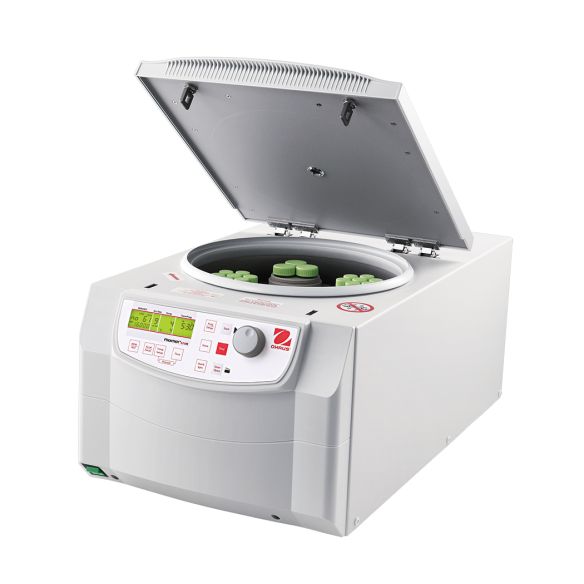
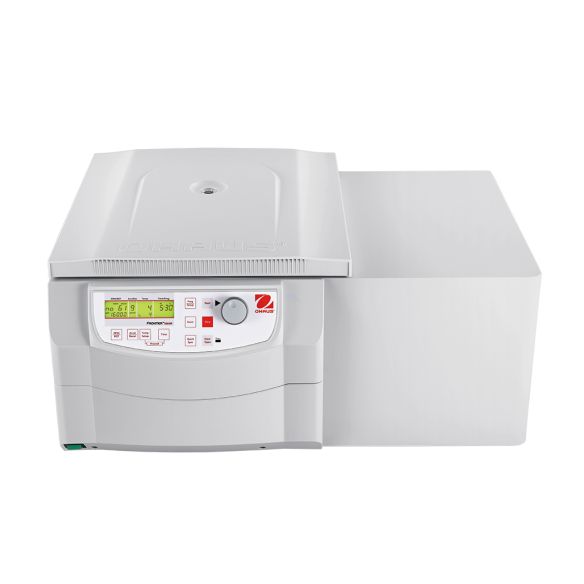
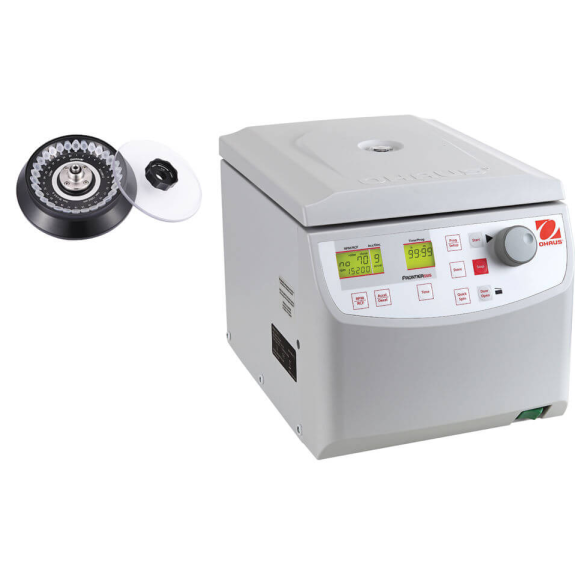
 Ohaus 30314811, FC5714 Frontier 5000 Series Multi Pro High Speed Centrifuge, 14000 RPMSpecial Price $3,043.44 Regular Price $3,048.44
 -
 Ohaus FC5816R V1, 30314819, Frontier 5000 Series Multi Pro High Speed Centrifuge, 16000 RPM (Ohaus), 120VSpecial Price $8,451.25 Regular Price $8,456.25


