Uses: 1. Deubiquitinylating enzyme substrates (general/linkage specific). 2. Profiling of DUB linkage-type preference or specificity in combination with other single lysine only polyubiquitinylated substrates (e.g. (K6-only)Ubn-ubiquitinylated substrate, Prod. No. BML-UW0615) 3. Investigation of polyubiquitin chain recognition by and interaction with ubiquitin binding proteins.
Formulation
Liquid. In 50mM TRIS, pH 7.5, containing 150mM NaCl and 1mM DTT.
MW
~50-250kDa
Purity
≥95% (SDS-PAGE)
Purity Detail
High molecular weight conjugates were separated from free ubiquitin by size exclusion chromatography.
Quality Control
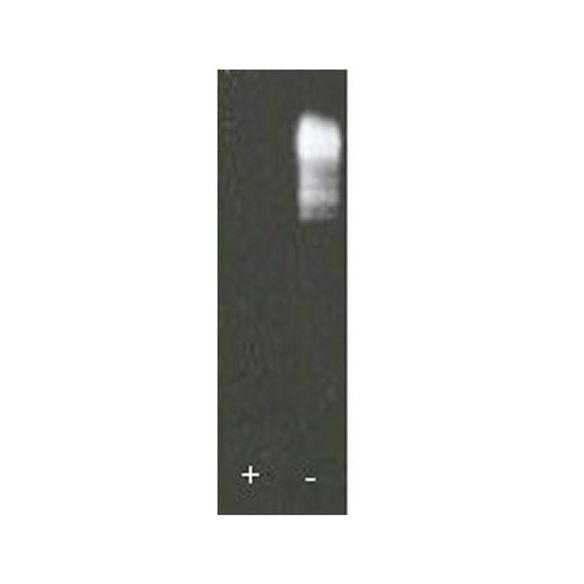
SDS-PAGE: Multiple high molecular weight bands are observed for (K11-only) Ub conjugate reactions (Fig. 1). Immunoblotting: Detection of high molecular weight bands with the polyubiquitin-chain reactive monoclonal antibody FK2 (Prod. No. BML-PW8810) demonstrates their polyubiquitinylated, rather than mono- or multiubiquitinylated, status (Fig. 2). Mass spectrometry: Conjugates were analyzed by mass spectrometry following tryptic digest. A signature peptide corresponding to the predicted branched ubiquitin fragments (H-TLTGK(G-G)TITLEVEPSDTIENVK-OH) was identified, confirming the polyubiquitinylated status of the conjugates and the nature of the linkage type. DUB reactivity: The potential utility of (K11-only)Ubn-ubiquitinylated conjugates as DUB substrates was demonstrated by their deconjugation in the presence of the isolated catalytic domain of USP2 (Prod. No. BML-UW9850), a DUB of general and promiscuous activity that appears to exhibit no linkage preference (Fig. 3).
Source
Protein components produced in E. coli. Synthesized enzymatically in vitro. (K11-only)Ubn-ubiquitinylated substrate protein was produced using K11-only mutant ubiquitin.
Technical Info / Product Notes
TECHNICAL NOTE: Under certain conditions these polyubiquitinylated substrates can bind to glutathione-derivatised matrices. This may have implications for their successful use in some applications, for example, if they are to be used in concert with GST-tagged proteins requiring subsequent affinity isolation with glutathione-based matrices. Such methods of detection or isolation should be avoided wherever possible in order to avoid complication in interpretation of results obtained.